Data for 2011
Demand for Family Planning Satisfied by Modern Methods, 2011
2011, as UN DESA Population Division’s 2024 release gives it · stored as published, never rewritten
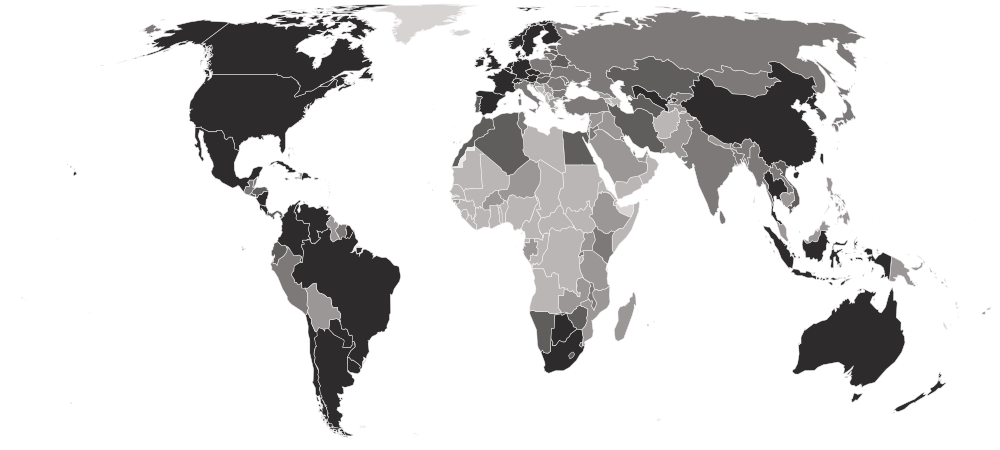
Demand for Family Planning Satisfied by Modern Methods, 2011 covers 196 countries on 3 measures. China is highest, at 92.6; Somalia is lowest, at 4.8. The middle country reads 64.8. Against 2010, 184 values changed (159 up, 25 down), the same countries are covered.
Demand for Family Planning Satisfied by Modern Methods · Data for 2011
HighestChina
92.6
LowestSomalia
4.8Shaded by value in five groups of equal size, darkest at the better end. A higher value is the better result.
01Position · derived
The table
Every country and every column of Demand for Family Planning Satisfied by Modern Methods, 2011, as published. UN DESA Population Division ranks nobody on this measure; the position is derived here by ordering the published values. “=” marks a shared position.
Showing 25 of 196 countries · select a heading to sort
| derived | |||||
|---|---|---|---|---|---|
| 1 | ChinaCHNEastern Asia | 92.6 | 85.7 | 95.6 | Projection |
| 2 |  CanadaCANNorthern America | 92.3 | 81.8 | 96.4 | Projection |
| 3 |  FranceFRAWestern Europe | 91.0 | 79.3 | 94.2 | Projection |
| 4 |  ThailandTHASouth-eastern Asia | 90.6 | 87.2 | 93.2 | Interpolation |
| 5 |  GermanyDEUWestern Europe | 90.3 | 75.2 | 94.8 | Projection |
| 6 |  BelgiumBELWestern Europe | 90.0 | 76.9 | 94.4 | Projection |
| 7 |  SwitzerlandCHEWestern Europe | 88.8 | 81.8 | 92.4 | Projection |
| 8 |  IrelandIRLNorthern Europe | 88.4 | 77.4 | 92.6 | Projection |
| 9 |  BrazilBRASouth America | 88.2 | 83.3 | 91.4 | Projection |
| 10 |  FinlandFINNorthern Europe | 88.1 | 78.1 | 92.2 | Projection |
| 11 |  NetherlandsNLDWestern Europe | 87.9 | 74.9 | 93.3 | Projection |
| 12 |  NorwayNORNorthern Europe | 87.8 | 73.6 | 94.2 | Projection |
| =13 |  AustriaAUTWestern Europe | 87.5 | 74.7 | 92.2 | Projection |
| =13 |  CubaCUBCaribbean | 87.5 | 82.3 | 91.1 | Interpolation |
| 15 |  New ZealandNZLAustralia and New Zealand | 87.1 | 72.0 | 92.8 | Projection |
| 16 |  NicaraguaNICCentral America | 86.9 | 83.2 | 89.8 | Interpolation |
| 17 |  SpainESPSouthern Europe | 86.6 | 80.9 | 90.8 | Projection |
| 18 |  DenmarkDNKNorthern Europe | 86.2 | 67.7 | 94.9 | Projection |
| 19 |  SwedenSWENorthern Europe | 85.6 | 73.3 | 91.9 | Projection |
| 20 |  UruguayURYSouth America | 85.3 | 73.8 | 91.8 | Projection |
| =21 |  AustraliaAUSAustralia and New Zealand | 84.8 | 70.0 | 90.2 | Projection |
| =21 |  BotswanaBWASouthern Africa | 84.8 | 70.4 | 91.9 | Projection |
| 23 |  United KingdomGBRNorthern Europe | 84.7 | 77.4 | 89.7 | Interpolation |
| 24 |  Costa RicaCRICentral America | 84.2 | 77.1 | 88.9 | Interpolation |
| =25 |  ColombiaCOLSouth America | 83.9 | 80.8 | 86.5 | Interpolation |
| =25 |  Hong KongHKGEastern Asia | 83.9 | 70.6 | 90.8 | Projection |
| 27 |  Dominican RepublicDOMCaribbean | 83.0 | 80.2 | 85.6 | Interpolation |
| 28 |  TaiwanTWNEastern Asia | 82.1 | 63.9 | 90.3 | Projection |
| 29 |  South AfricaZAFSouthern Africa | 81.7 | 74.5 | 87.2 | Interpolation |
| 30 |  UzbekistanUZBCentral Asia | 81.6 | 71.6 | 88.5 | Interpolation |
| 31 |  ChileCHLSouth America | 81.3 | 70.1 | 87.7 | Projection |
| 32 |  CzechiaCZEEastern Europe | 80.7 | 66.2 | 89.0 | Projection |
| 33 |  IndonesiaIDNSouth-eastern Asia | 80.5 | 77.5 | 83.3 | Interpolation |
| 34 |  North KoreaPRKEastern Asia | 80.1 | 71.2 | 85.4 | Interpolation |
| 35 |  ParaguayPRYSouth America | 80.0 | 72.7 | 85.7 | Interpolation |
| =36 |  ArgentinaARGSouth America | 79.9 | 71.5 | 86.1 | Projection |
| =36 |  United StatesUSANorthern America | 79.9 | 71.8 | 85.5 | Interpolation |
| =38 |  MexicoMEXCentral America | 79.7 | 74.0 | 84.0 | Interpolation |
| =38 |  VenezuelaVENSouth America | 79.7 | 67.6 | 87.0 | Projection |
| =40 |  NamibiaNAMSouthern Africa | 79.5 | 74.7 | 83.8 | Interpolation |
| =40 |  ZimbabweZWEEastern Africa | 79.5 | 76.7 | 82.1 | Interpolation |
| 42 |  Puerto RicoPRICaribbean | 79.4 | 62.3 | 89.8 | Projection |
| 43 |  EgyptEGYNorthern Africa | 79.0 | 72.4 | 82.9 | Interpolation |
| 44 |  El SalvadorSLVCentral America | 78.9 | 71.1 | 84.7 | Interpolation |
| 45 |  VietnamVNMSouth-eastern Asia | 78.7 | 74.0 | 82.6 | Interpolation |
| 46 |  United States Virgin IslandsVIRCaribbean | 78.5 | 58.3 | 89.5 | Projection |
| =47 |  EcuadorECUSouth America | 77.7 | 71.8 | 82.3 | Interpolation |
| =47 |  LatviaLVANorthern Europe | 77.7 | 55.2 | 90.6 | Projection |
| 49 |  South KoreaKOREastern Asia | 77.6 | 64.8 | 85.5 | Projection |
| 50 |  HungaryHUNEastern Europe | 76.8 | 60.8 | 86.3 | Projection |
| 51 |  Saint Vincent and the GrenadinesVCTCaribbean | 76.4 | 53.1 | 89.8 | Projection |
| 52 |  EswatiniSWZSouthern Africa | 76.0 | 70.1 | 81.1 | Interpolation |
| 53 |  HondurasHNDCentral America | 75.9 | 71.8 | 79.3 | Interpolation |
| 54 |  PortugalPRTSouthern Europe | 75.7 | 51.2 | 89.1 | Projection |
| 55 |  BahamasBHSCaribbean | 75.4 | 50.5 | 90.2 | Projection |
| 56 |  KazakhstanKAZCentral Asia | 75.3 | 68.1 | 81.1 | Interpolation |
| 57 |  JamaicaJAMCaribbean | 75.1 | 57.3 | 84.7 | Interpolation |
| 58 |  MontserratMSRCaribbean | 75.0 | 49.5 | 89.9 | Projection |
| =59 |  DominicaDMACaribbean | 74.9 | 50.1 | 89.1 | Projection |
| =59 |  SingaporeSGPSouth-eastern Asia | 74.9 | 56.6 | 87.7 | Projection |
| 61 |  Cabo VerdeCPVWestern Africa | 74.5 | 60.1 | 82.9 | Projection |
| 62 |  LesothoLSOSouthern Africa | 74.0 | 70.4 | 77.2 | Interpolation |
| 63 |  TurkmenistanTKMCentral Asia | 73.8 | 63.9 | 81.6 | Interpolation |
| 64 |  SlovakiaSVKEastern Europe | 73.6 | 49.0 | 89.0 | Projection |
| 65 |  MoroccoMARNorthern Africa | 73.4 | 66.1 | 77.9 | Interpolation |
| =66 |  BhutanBTNSouthern Asia | 73.0 | 62.3 | 82.3 | Projection |
| =66 |  SloveniaSVNSouthern Europe | 73.0 | 47.0 | 89.8 | Projection |
| =68 |  Antigua and BarbudaATGCaribbean | 72.6 | 47.3 | 88.3 | Projection |
| =68 |  IranIRNSouthern Asia | 72.6 | 62.6 | 80.6 | Interpolation |
| 70 |  Marshall IslandsMHLMicronesia | 72.4 | 59.4 | 81.8 | Projection |
| 71 |  GuamGUMMicronesia | 72.3 | 50.3 | 86.1 | Projection |
| 72 |  PanamaPANCentral America | 72.1 | 64.3 | 78.8 | Interpolation |
| 73 |  EstoniaESTNorthern Europe | 72.0 | 64.9 | 77.9 | Interpolation |
| 74 |  AlgeriaDZANorthern Africa | 71.9 | 60.9 | 79.8 | Interpolation |
| =75 |  GrenadaGRDCaribbean | 71.8 | 46.8 | 87.7 | Projection |
| =75 |  Saint LuciaLCACaribbean | 71.8 | 58.2 | 81.3 | Interpolation |
| 77 |  BelarusBLREastern Europe | 71.4 | 62.4 | 78.5 | Projection |
| 78 |  BarbadosBRBCaribbean | 71.3 | 58.2 | 80.6 | Projection |
| 79 |  Sri LankaLKASouthern Asia | 70.9 | 59.9 | 79.3 | Interpolation |
| 80 |  RussiaRUSEastern Europe | 70.7 | 60.8 | 77.5 | Interpolation |
| =81 |  IndiaINDSouthern Asia | 70.6 | 63.8 | 76.6 | Interpolation |
| =81 |  Saint Kitts and NevisKNACaribbean | 70.6 | 44.4 | 87.3 | Projection |
| 83 |  TunisiaTUNNorthern Africa | 70.3 | 59.1 | 78.3 | Interpolation |
| 84 |  BangladeshBGDSouthern Asia | 70.2 | 66.4 | 73.6 | Interpolation |
| 85 |  MyanmarMMRSouth-eastern Asia | 69.4 | 62.0 | 76.4 | Interpolation |
| 86 |  MaltaMLTSouthern Europe | 69.3 | 36.1 | 91.7 | Projection |
| =87 |  Cook IslandsCOKPolynesia | 69.0 | 45.7 | 84.7 | Projection |
| =87 |  ItalyITASouthern Europe | 69.0 | 54.1 | 78.3 | Projection |
| =87 |  UkraineUKREastern Europe | 69.0 | 58.9 | 77.1 | Interpolation |
| 90 |  SurinameSURSouth America | 68.6 | 59.0 | 76.7 | Interpolation |
| =91 |  LithuaniaLTUNorthern Europe | 68.1 | 52.9 | 78.8 | Projection |
| =91 |  MongoliaMNGEastern Asia | 68.1 | 61.4 | 73.9 | Interpolation |
| =93 |  AnguillaAIACaribbean | 67.4 | 44.8 | 83.5 | Projection |
| =93 |  BelizeBLZCentral America | 67.4 | 58.9 | 74.8 | Interpolation |
| 95 |  JapanJPNEastern Asia | 66.8 | 54.5 | 76.3 | Projection |
| 96 |  IsraelISRWestern Asia | 66.5 | 40.6 | 84.0 | Projection |
| 97 |  RomaniaROUEastern Europe | 65.9 | 46.8 | 80.7 | Projection |
| 98 |  KenyaKENEastern Africa | 65.4 | 60.7 | 69.8 | Interpolation |
| 99 |  KuwaitKWTWestern Asia | 64.2 | 43.4 | 79.9 | Projection |
| 100 |  KyrgyzstanKGZCentral Asia | 64.0 | 58.9 | 69.1 | Interpolation |
| =101 |  GuatemalaGTMCentral America | 63.9 | 56.1 | 70.6 | Interpolation |
| =101 |  PolandPOLEastern Europe | 63.9 | 52.1 | 73.1 | Projection |
| 103 |  MalawiMWIEastern Africa | 62.6 | 58.5 | 66.6 | Interpolation |
| 104 |  PeruPERSouth America | 62.2 | 57.8 | 66.2 | Interpolation |
| 105 |  CuraçaoCUWCaribbean | 61.7 | 42.7 | 77.1 | Projection |
| 106 |  LaosLAOSouth-eastern Asia | 61.2 | 57.1 | 65.2 | Interpolation |
| 107 |  QatarQATWestern Asia | 61.1 | 47.8 | 73.1 | Projection |
| 108 |  PalestinePSEWestern Asia | 60.9 | 51.1 | 69.8 | Interpolation |
| 109 |  MoldovaMDAEastern Europe | 60.6 | 50.0 | 69.8 | Interpolation |
| 110 |  Turks and Caicos IslandsTCACaribbean | 60.1 | 43.1 | 75.5 | Projection |
| =111 |  BulgariaBGREastern Europe | 59.6 | 43.0 | 74.2 | Projection |
| =111 |  LebanonLBNWestern Asia | 59.6 | 45.4 | 72.4 | Projection |
| =111 |  PalauPLWMicronesia | 59.6 | 37.1 | 78.5 | Projection |
| 114 |  Northern Mariana IslandsMNPMicronesia | 59.5 | 30.2 | 82.4 | Projection |
| 115 |  JordanJORWestern Asia | 58.9 | 51.6 | 65.1 | Interpolation |
| 116 |  TürkiyeTURWestern Asia | 58.8 | 48.0 | 68.1 | Interpolation |
| 117 |  RwandaRWAEastern Africa | 58.1 | 53.6 | 62.0 | Interpolation |
| 118 |  SyriaSYRWestern Asia | 58.0 | 45.2 | 69.8 | Projection |
| 119 |  ZambiaZMBEastern Africa | 57.8 | 51.9 | 63.6 | Interpolation |
| 120 |  GreeceGRCSouthern Europe | 57.6 | 34.5 | 77.6 | Projection |
| 121 |  NepalNPLSouthern Asia | 57.3 | 53.4 | 61.1 | Interpolation |
| 122 |  GuyanaGUYSouth America | 56.5 | 50.6 | 62.2 | Interpolation |
| 123 |  VanuatuVUTMelanesia | 56.0 | 45.4 | 65.1 | Projection |
| 124 |  Trinidad and TobagoTTOCaribbean | 55.8 | 45.5 | 64.8 | Interpolation |
| 125 |  IraqIRQWestern Asia | 55.0 | 43.9 | 65.8 | Interpolation |
| 126 |  United Arab EmiratesAREWestern Asia | 54.9 | 30.3 | 76.4 | Projection |
| 127 |  Solomon IslandsSLBMelanesia | 54.3 | 42.7 | 63.1 | Interpolation |
| 128 |  BahrainBHRWestern Asia | 54.1 | 31.9 | 74.2 | Projection |
| 129 |  CambodiaKHMSouth-eastern Asia | 53.4 | 46.9 | 59.4 | Interpolation |
| =130 |  FijiFJIMelanesia | 53.1 | 35.8 | 69.5 | Projection |
| =130 |  MadagascarMDGEastern Africa | 53.1 | 47.6 | 58.3 | Interpolation |
| 132 |  Guinea-BissauGNBWestern Africa | 52.2 | 42.6 | 61.2 | Interpolation |
| 133 |  TajikistanTJKCentral Asia | 52.0 | 46.5 | 57.5 | Projection |
| =134 |  CroatiaHRVSouthern Europe | 51.6 | 23.7 | 82.8 | Projection |
| =134 |  TanzaniaTZAEastern Africa | 51.6 | 46.8 | 56.2 | Interpolation |
| 136 |  EthiopiaETHEastern Africa | 51.4 | 47.5 | 55.5 | Interpolation |
| 137 |  NauruNRUMicronesia | 51.3 | 36.3 | 67.4 | Projection |
| 138 |  São Tomé and PríncipeSTPMiddle Africa | 51.1 | 44.9 | 57.4 | Interpolation |
| 139 |  MauritiusMUSEastern Africa | 50.8 | 34.8 | 65.3 | Interpolation |
| 140 |  PhilippinesPHLSouth-eastern Asia | 50.4 | 45.1 | 55.5 | Interpolation |
| 141 |  MalaysiaMYSSouth-eastern Asia | 50.1 | 38.7 | 61.5 | Projection |
| 142 |  BoliviaBOLSouth America | 48.9 | 40.1 | 56.9 | Interpolation |
| 143 |  TongaTONPolynesia | 48.1 | 39.2 | 57.2 | Projection |
| 144 |  SerbiaSRBSouthern Europe | 47.3 | 38.5 | 56.9 | Interpolation |
| 145 |  GeorgiaGEOWestern Asia | 46.4 | 34.4 | 56.0 | Interpolation |
| 146 |  PakistanPAKSouthern Asia | 45.5 | 39.6 | 51.8 | Interpolation |
| 147 |  Papua New GuineaPNGMelanesia | 44.5 | 35.5 | 53.7 | Interpolation |
| 148 |  HaitiHTICaribbean | 44.4 | 40.2 | 48.8 | Interpolation |
| 149 |  TuvaluTUVPolynesia | 43.3 | 32.9 | 54.4 | Interpolation |
| 150 |  UgandaUGAEastern Africa | 42.6 | 38.8 | 46.4 | Interpolation |
| 151 |  Burkina FasoBFAWestern Africa | 42.5 | 38.2 | 46.9 | Interpolation |
| 152 |  GabonGABMiddle Africa | 41.8 | 34.9 | 48.4 | Interpolation |
| 153 |  MozambiqueMOZEastern Africa | 41.7 | 38.1 | 45.7 | Interpolation |
| 154 |  Saudi ArabiaSAUWestern Asia | 41.4 | 29.7 | 55.1 | Projection |
| 155 |  Timor-LesteTLSSouth-eastern Asia | 40.6 | 35.3 | 46.4 | Interpolation |
| 156 |  NigerNERWestern Africa | 40.2 | 34.9 | 45.7 | Interpolation |
| 157 |  CameroonCMRMiddle Africa | 40.0 | 36.4 | 43.9 | Interpolation |
| 158 |  KiribatiKIRMicronesia | 39.6 | 32.7 | 46.4 | Interpolation |
| 159 |  MontenegroMNESouthern Europe | 39.1 | 29.7 | 49.1 | Projection |
| 160 |  MaldivesMDVSouthern Asia | 38.8 | 33.0 | 44.8 | Interpolation |
| 161 |  Sierra LeoneSLEWestern Africa | 38.7 | 34.4 | 43.2 | Interpolation |
| 162 |  ArmeniaARMWestern Asia | 38.2 | 29.9 | 46.8 | Interpolation |
| 163 |  YemenYEMWestern Asia | 38.1 | 31.4 | 45.4 | Interpolation |
| 164 |  Republic of the CongoCOGMiddle Africa | 37.8 | 32.8 | 42.9 | Interpolation |
| 165 |  BurundiBDIEastern Africa | 37.7 | 34.0 | 41.8 | Interpolation |
| 166 |  DjiboutiDJIEastern Africa | 37.4 | 25.5 | 51.8 | Projection |
| 167 |  NigeriaNGAWestern Africa | 37.1 | 32.9 | 41.3 | Interpolation |
| 168 |  LiberiaLBRWestern Africa | 37.0 | 31.8 | 42.8 | Interpolation |
| 169 |  AfghanistanAFGSouthern Asia | 36.9 | 31.2 | 44.3 | Projection |
| =170 |  GhanaGHAWestern Africa | 36.0 | 32.0 | 40.3 | Interpolation |
| =170 |  TogoTGOWestern Africa | 36.0 | 31.1 | 41.1 | Interpolation |
| 172 |  SamoaWSMPolynesia | 34.6 | 29.8 | 39.7 | Interpolation |
| 173 |  Côte d’IvoireCIVWestern Africa | 33.9 | 29.6 | 38.5 | Interpolation |
| 174 |  SenegalSENWestern Africa | 32.9 | 29.2 | 36.8 | Interpolation |
| 175 |  LibyaLBYNorthern Africa | 32.8 | 22.9 | 44.0 | Interpolation |
| 176 |  OmanOMNWestern Asia | 31.5 | 23.7 | 41.3 | Interpolation |
| 177 |  AngolaAGOMiddle Africa | 30.6 | 25.2 | 36.3 | Projection |
| 178 |  GambiaGMBWestern Africa | 30.0 | 24.9 | 35.7 | Interpolation |
| 179 |  Equatorial GuineaGNQMiddle Africa | 28.9 | 22.8 | 33.7 | Interpolation |
| =180 |  ComorosCOMEastern Africa | 28.8 | 24.0 | 34.3 | Interpolation |
| =180 |  MaliMLIWestern Africa | 28.8 | 24.6 | 33.3 | Interpolation |
| 182 |  Central African RepublicCAFMiddle Africa | 28.7 | 21.4 | 37.3 | Interpolation |
| 183 |  Bosnia and HerzegovinaBIHSouthern Europe | 27.8 | 18.9 | 39.2 | Interpolation |
| 184 |  North MacedoniaMKDSouthern Europe | 27.5 | 19.1 | 38.7 | Interpolation |
| 185 |  SudanSDNNorthern Africa | 26.2 | 18.4 | 36.8 | Interpolation |
| 186 |  GuineaGINWestern Africa | 25.8 | 21.5 | 30.4 | Interpolation |
| 187 |  MauritaniaMRTWestern Africa | 24.7 | 18.7 | 32.9 | Interpolation |
| 188 |  AzerbaijanAZEWestern Asia | 23.5 | 17.5 | 31.0 | Projection |
| =189 |  BeninBENWestern Africa | 22.3 | 19.3 | 25.6 | Interpolation |
| =189 |  EritreaERIEastern Africa | 22.3 | 16.7 | 29.4 | Projection |
| 191 |  AlbaniaALBSouthern Europe | 19.6 | 12.4 | 29.5 | Interpolation |
| 192 |  KosovoXKXSouthern Europe | 18.5 | 9.1 | 33.7 | Projection |
| 193 |  DR CongoCODMiddle Africa | 17.7 | 14.2 | 21.8 | Interpolation |
| 194 |  ChadTCDMiddle Africa | 17.3 | 13.6 | 22.0 | Interpolation |
| 195 |  South SudanSSDEastern Africa | 16.2 | 11.0 | 23.9 | Projection |
| 196 | SomaliaSOMEastern Africa | 4.8 | 1.4 | 15.9 | Interpolation |
02In 2011
At either end
The 5 countries at each end of the headline, then the highest and lowest on each other measure.
Lowest
- 196Somalia4.8
- 195South Sudan16.2
- 194Chad17.3
- 193DR Congo17.7
- 192Kosovo18.5
A higher value is the better result. The middle country reads 64.8. “Shared” marks a value another country also holds.
Each measure’s ends
032010 → 2011
Since 2010
What changed between 2010 and this one: who joined or left, and how far the headline moved.
- +0 / −0countries joined / left
- 184values changed, of 196 in both
- 159 · 25rose · fell
- 12unchanged
Rose most
- Rwanda54.2 → 58.1+3.9
- Ethiopia47.6 → 51.4+3.8
- Sierra Leone35.0 → 38.7+3.7
- Kenya62.5 → 65.4+2.9
- Malawi59.8 → 62.6+2.8
Fell most
- Maldives40.6 → 38.8−1.8
- Nepal58.1 → 57.3−0.8
- Solomon Islands55.1 → 54.3−0.8
- Kyrgyzstan64.7 → 64.0−0.7
- Tajikistan52.6 → 52.0−0.6
Both years come from the same release, so a difference here is a change in the data, not a revision of it. Every country’s full history is charted on the statistic page.
04Caveats
Read before you use
What this edition’s numbers are and are not, worked out from the file itself.
One year of the 2024 release
Every year in this series comes from UN DESA Population Division’s 2024 release, recalculated on one method. It can differ from what was first published for 2011.
172 distinct values among 196
Values are stored exactly as published, to 1 decimal. 3 countries share 69.0. Countries sharing a value share a position too.
The position is ours
UN DESA Population Division publishes values only. The order here sorts the published values, and the page says so wherever it prints one.
Which end is better
A higher value is the better result.
Nothing missing
Every one of the 196 countries has every column.
Some readings carry a flag
UN DESA Population Division marks readings it considers estimates or provisional. The flags in this file: Projection, Interpolation.
05The files
Download and cite
The table as a file, digit for digit, what this site changed, and a citation for this edition.
- .csv
For a spreadsheet or code
196 rows · 9.6 KB · UTF-8, opens in Excel
Opens with 11 lines of source notes; the table starts on row 13.
Download family-planning-demand-satisfied-2011-nations-inquiry.csv - ↗
The publisher’s original
UN DESA Population Division’s own file, on its own site.
Data_FamilyPlanningIndicators_2024.zip
What this site changed: Reshaped into one row per country: regional and income-group totals are left out, only the columns listed are kept, each row gets its ISO 3166 code, and some country names are brought to one spelling. No value is recalculated, rescaled or rounded.
Licence: CC BY 3.0 IGO. The version of CC BY written for intergovernmental organisations. Credit the publisher and say what you changed.
Cite this edition
UN DESA Population Division (2011). Demand for Family Planning Satisfied by Modern Methods, 2011 [data set], describing 2011. As held by Nations Inquiry, https://nationsinquiry.com/datasets/family-planning-demand-satisfied/2011
0634 held
Other years
‹ The year before
Demand for Family Planning Satisfied by Modern Methods, 2010196 countries
The year after ›
Demand for Family Planning Satisfied by Modern Methods, 2012196 countries
All of them
Demand for Family Planning Satisfied by Modern Methods: every year34 held, with the data dictionary, coverage and licence.
How it has moved, charted by country
07Questions
Demand for Family Planning Satisfied by Modern Methods, 2011: questions and answers
Which country has the highest demand for family planning satisfied in Demand for Family Planning Satisfied by Modern Methods, 2011?
China, at 92.6, of the 196 countries in the file.
What year does Demand for Family Planning Satisfied by Modern Methods, 2011 describe?
2011.
How many countries does Demand for Family Planning Satisfied by Modern Methods, 2011 cover?
196.
Where can I download Demand for Family Planning Satisfied by Modern Methods, 2011?
On this page, as a CSV file holding every value exactly as published, or from the publisher’s own site, linked below.
Is Demand for Family Planning Satisfied by Modern Methods, 2011 the newest?
No. The newest held here is Demand for Family Planning Satisfied by Modern Methods, 2023.